Rockhound State Park Camping Review: Discover Desert Treasures Beneath New Mexico’s Beautiful Mountain Skies
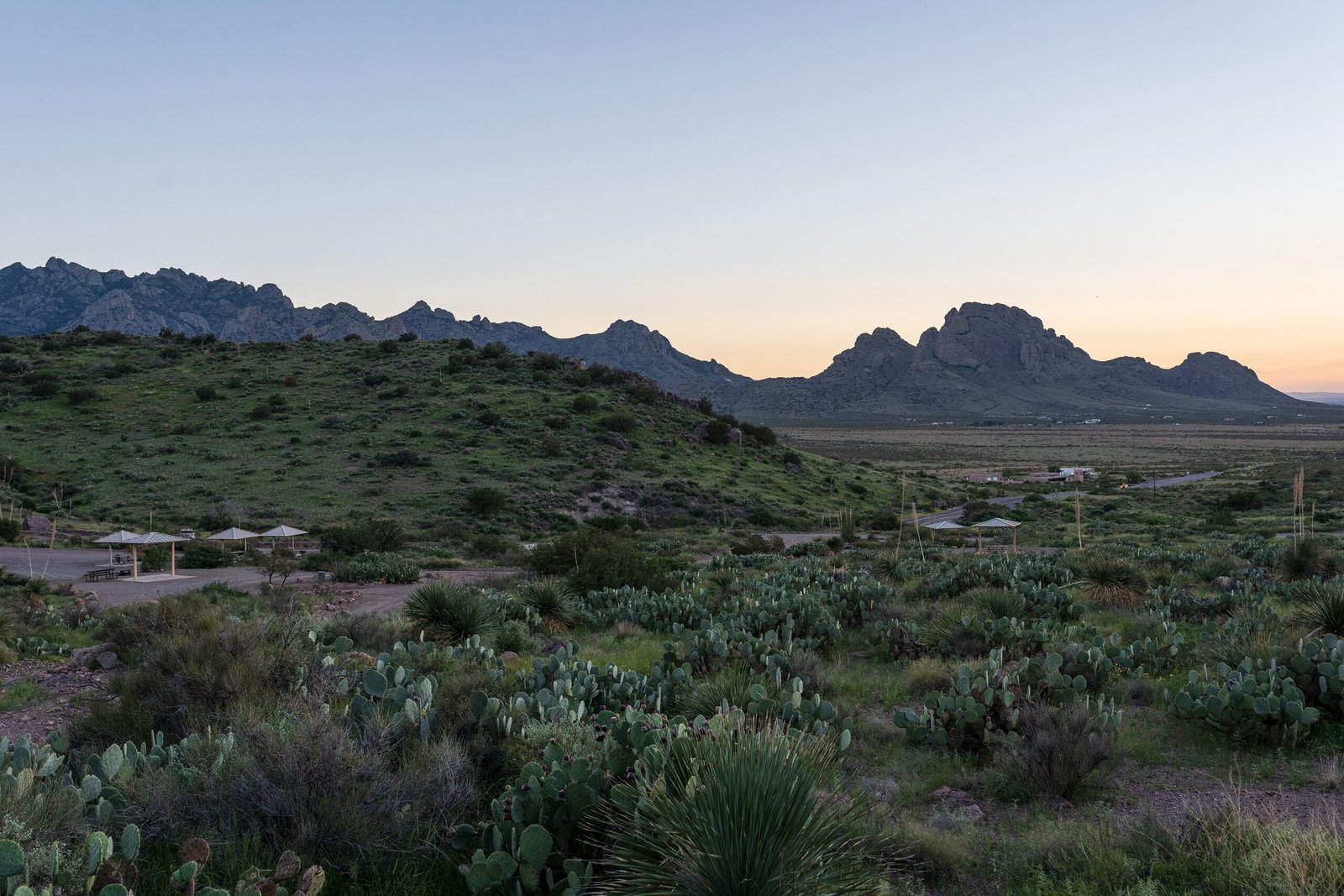
Featured image: Photo: Matthew.kowal / Wikimedia Commons, CC BY-SA 4.0
Imagine waking up inside your tent as the first rays of sunlight spread across the rugged mountains of southern New Mexico.
The desert air is cool and refreshing. The landscape is quiet. And beyond your campsite, rocky hillsides rise above a broad valley dotted with cactus, desert shrubs, and fascinating geological formations.
You step outside with a cup of coffee and watch the mountains gradually change from deep purple to shades of orange and gold.
Later, you might explore a winding trail, search for beautiful quartz crystals, discover an unusual piece of jasper, or photograph a spectacular desert sunset.
And when darkness arrives?
The enormous New Mexico sky fills with stars.
That’s the appeal of Rockhound State Park, a distinctive camping destination near Deming, New Mexico.
Located along the western slopes of the Little Florida Mountains, Rockhound offers something that few state parks can match: the opportunity to combine traditional camping with recreational rock and mineral collecting.
Instead of simply admiring the landscape, visitors can search for fascinating geological specimens and, subject to park rules, take a limited amount home.
The campground also offers modern conveniences, including developed campsites, drinking water, restrooms, showers, and nearby hiking trails.
But Rockhound isn’t a lush woodland campground with towering shade trees and flowing streams.
This is genuine high-desert camping, where sunshine, wind, wide-open views, and dramatic temperature changes are part of the experience.
For tent campers who appreciate unusual landscapes, geology, peaceful surroundings, and outdoor adventure, Rockhound State Park is a destination worth discovering.
Rockhound State Park at a glance
| Feature | Details |
|---|---|
| Location | Deming, southwestern New Mexico |
| Address | 9880 Stirrup Road SE, Deming, NM 88030 |
| Campground type | New Mexico state park campground |
| Setting | High desert, Little Florida Mountains |
| Elevation | Approximately 4,520–5,400 feet across the park |
| Developed campsites | 29 listed by New Mexico State Parks |
| Electric campsites | 23 |
| Tent camping | Permitted at appropriate campsites |
| Drinking water | Available in the campground |
| Restrooms | Flush toilets and vault toilets |
| Showers | Yes |
| Campsite amenities | Picnic tables and fire rings at designated sites |
| RV dump station | Yes |
| Visitor center | Yes, with exhibits |
| Hiking trails | Approximately 3 miles throughout the park |
| Main attractions | Rock collecting, hiking, wildlife, geology, desert scenery |
| Pets | Permitted under state park rules |
| Operating season | Year-round |
| Reservations | Through New Mexico State Parks / ReserveAmerica |
| Best suited for | Tent campers, rockhounds, families, hikers, photographers |
Verified using the New Mexico State Parks campground listing and official reservation information.
What makes Rockhound State Park special?
Most campgrounds are destinations where you enjoy the scenery and leave everything exactly as you found it.
Rockhound is different.
The park was established in 1966 and became known for allowing visitors to collect limited quantities of rocks and minerals for personal use.
That unusual feature remains central to its identity.
The landscape contains a variety of fascinating geological materials, including quartz crystals, jasper, agate, and mineral-filled nodules commonly known as thunder eggs.
For visitors who enjoy geology, this creates an experience that’s part camping trip, part outdoor treasure hunt.
And you don’t need to be a professional geologist to appreciate it.
Families can enjoy searching for interesting specimens, comparing colors and textures, and learning how geological processes shaped the surrounding mountains.
Children often find the experience particularly engaging.
Instead of simply walking along a trail, they have an opportunity to observe the landscape closely and discover something unusual.
But the park’s appeal extends beyond collecting rocks.
The Little Florida Mountains create a beautiful backdrop for the campground.
From many areas, visitors can enjoy sweeping views of the surrounding desert basin.
The landscape is dotted with prickly pear cactus, yucca, ocotillo, creosote bush, and other plants adapted to southern New Mexico’s dry climate.
During favorable spring conditions, desert wildflowers add unexpected splashes of color.
The park also provides opportunities for birdwatching, photography, hiking, and wildlife observation.
And because the campground is relatively small, it can offer a peaceful atmosphere compared with larger commercial camping destinations.
For campers seeking something different from a typical forest or lakeside campground, Rockhound delivers a memorable change of scenery.
Campsites and the tent camping experience
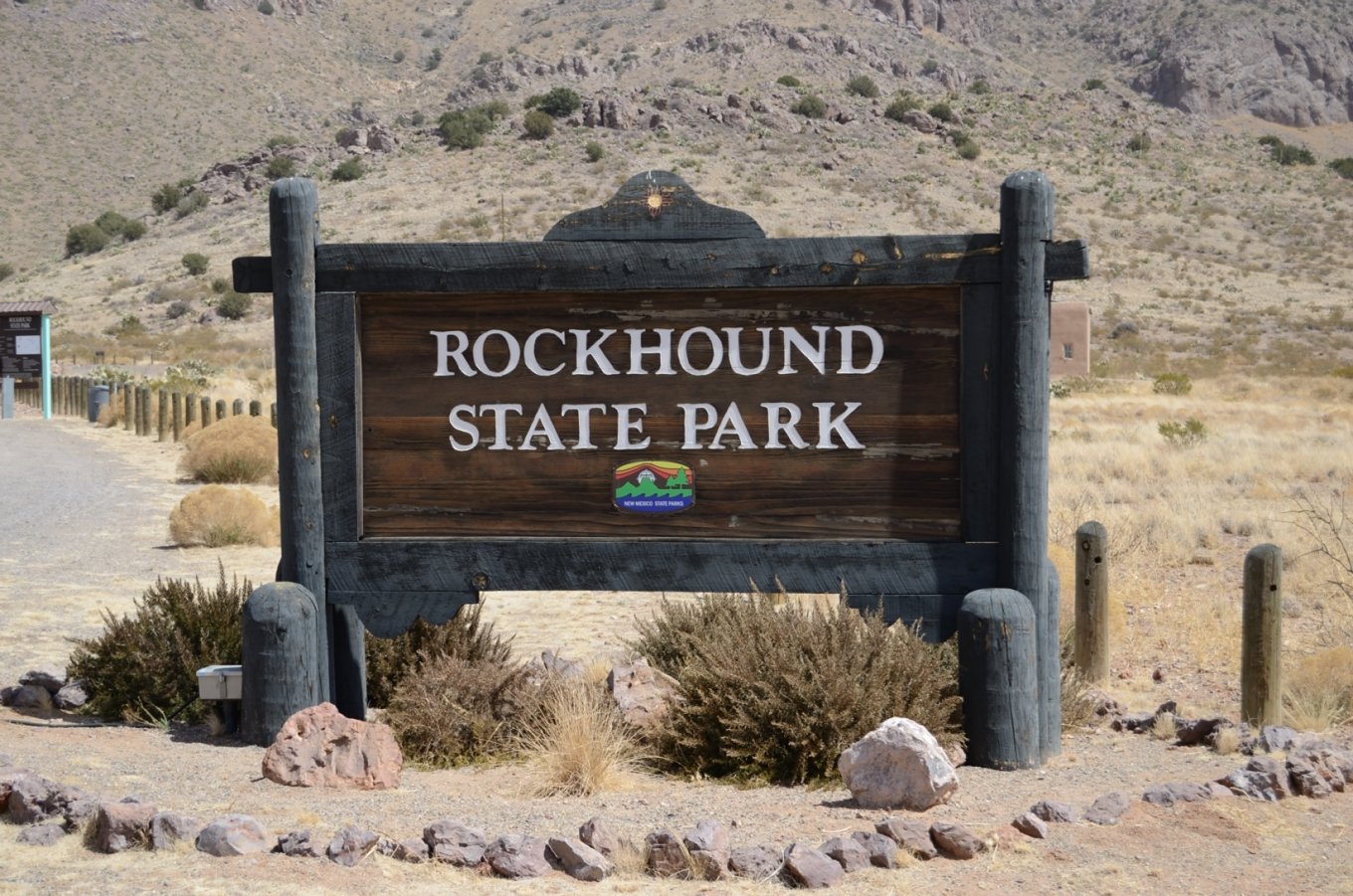
Photo: John Fowler from Placitas, NM, USA / Wikimedia Commons, CC BY 2.0
Rockhound State Park has a compact developed campground with 29 sites listed in the state’s official park summary.
Twenty-three have electrical service, and the campground includes shared drinking water, restrooms, and showers.
Although many of the developed sites accommodate RVs, tent campers can also enjoy the campground.
The important consideration is selecting a campsite suitable for your tent and camping equipment.
Because the campground is located on rocky desert terrain, individual sites can vary in surface conditions, exposure, and usable space.
Some sites provide views across the surrounding basin.
Others are positioned closer to the hillside.
What should tent campers expect?
The biggest difference from woodland camping is the environment.
You won’t find a thick canopy of pine trees protecting your tent from the sun.
Instead, expect an open landscape with scattered desert vegetation and broad views of the mountains.
That can be wonderful for photography and stargazing.
However, it also means your tent may be exposed to direct sunlight and strong winds.
During warmer months, temperatures inside a tent can rise quickly after sunrise.
A tent with good ventilation is essential.
So is a reliable rainfly, since summer thunderstorms can develop rapidly.
The rocky ground also makes campsite preparation important.
Bring a comfortable sleeping pad and sturdy tent stakes suitable for firm or gravelly soil.
Avoid setting up your tent in drainage channels or low areas where stormwater could collect.
Campsite shade and comfort
Rockhound’s landscape has relatively little natural shade.
Some developed campsites have covered picnic tables, which can provide welcome relief from direct sunlight.
However, the amount of shade available for a tent depends on the specific site.
Don’t assume that a covered picnic table means the tent area will also be shaded.
For longer stays, a portable shade canopy can make daytime camping more comfortable—provided it’s securely anchored and permitted under current weather conditions.
Privacy and atmosphere
One of Rockhound’s strongest features is its small size.
With fewer than 30 developed campsites, the campground can feel less overwhelming than a large destination park.
Visitor reviews frequently praise its quiet atmosphere, cleanliness, and mountain views.
However, this is still a developed campground.
Neighboring tents and RVs may be visible, and privacy depends on your chosen site.
Our tent camping tip: Select your campsite using the official reservation photographs and map. Prioritize a reasonably level tent area, appropriate wind exposure, and convenient access to drinking water and restrooms.
For campers who appreciate desert scenery and don’t require extensive resort-style facilities, Rockhound offers a rewarding experience.
Campground amenities and facilities
Rockhound provides a useful collection of amenities for a relatively small desert campground.
The official park listing confirms restrooms with water, showers, vault toilets, drinking water in the campground, and an RV dump station.
For tent campers, access to showers and flush toilets is especially welcome.
After spending the day hiking across dusty trails and rocky terrain, being able to enjoy a shower can make a considerable difference.
Drinking water
The campground provides drinking water.
However, southern New Mexico’s dry climate makes hydration particularly important.
Don’t rely entirely on a single water bottle or assume you’ll find water along the hiking trails.
Bring enough drinking water for your campsite and all planned activities.
During hot weather, carry additional water for emergencies.
Visitor center and exhibits
Rockhound has a visitor center with exhibits.
This is an excellent place to begin your visit.
The exhibits provide context about the area’s geology, natural environment, and history.
For visitors interested in rock collecting, learning about the different minerals before heading out can make the experience more enjoyable.
The park also lists a gift shop and gardens among its amenities.
Hours may vary, so confirm availability with park staff.
Picnic areas and group facilities
The park includes picnic facilities and a group picnic shelter.
These are useful for families, small groups, and visitors who want to enjoy a meal surrounded by desert scenery.
Group camping facilities are also listed.
If you’re organizing a gathering, contact the park directly to confirm group accommodations, occupancy limits, and reservation requirements.
Campfires and cooking
This is an especially important consideration.
Rockhound State Park is currently under Stage II fire restrictions.
The restrictions prohibit campfires, charcoal fires, and wood-burning stoves.
Approved liquid-petroleum or LPG-fueled devices may be used under specified safety conditions.
The state’s posted restriction period currently runs through December 31, 2026, unless changed.
That means campers should not plan on traditional wood campfires during the restriction period.
Bring an appropriate propane camping stove and check the latest park alerts before departure.
Things to do at Rockhound State Park
Rockhound’s greatest attraction is the opportunity to explore its unique geology and desert landscape.
Search for rocks and minerals
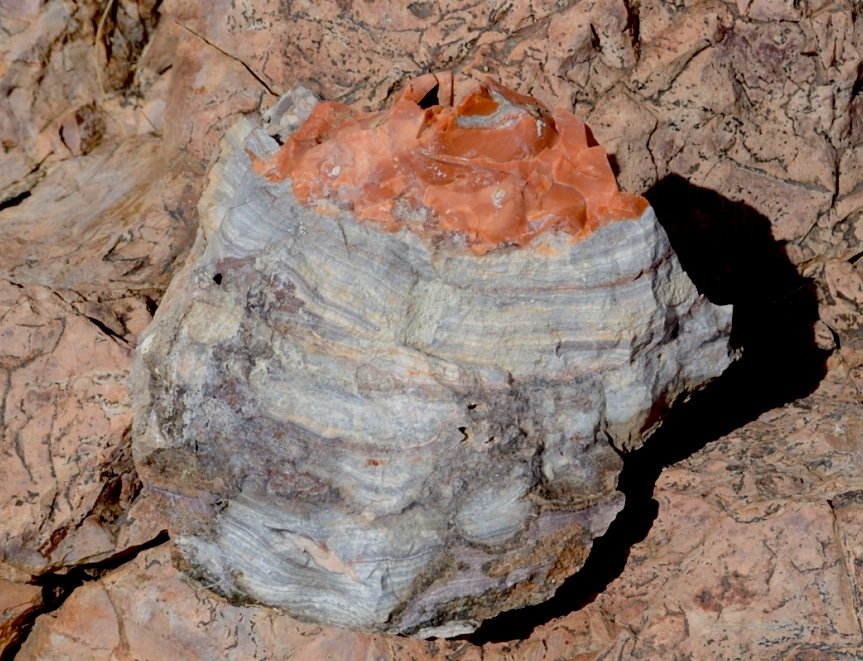
Photo: John Fowler from Placitas, NM, USA / Wikimedia Commons, CC BY 2.0
Rock collecting is the experience that gives the park its name.
The surrounding hills contain a variety of geological materials that have attracted collectors for decades.
Quartz crystals are among the most recognizable finds.
Jasper and agate are also associated with the area.
Thunder eggs are another fascinating possibility.
These rounded volcanic nodules can contain interesting mineral formations inside, although their appearance varies considerably.
Not every rock you discover will contain a beautiful crystal or colorful agate.
In fact, part of the appeal is learning to recognize different materials and understanding how they formed.
For beginners, the experience can be as simple as walking carefully through permitted collecting areas and looking for interesting shapes, colors, and textures.
Bring a small collection bag, sturdy shoes, and a field guide or identification app.
However, follow all posted collecting restrictions.
The park’s longstanding personal-use collecting allowance has been described as up to 15 pounds per visitor, but confirm the current limit and designated collecting areas with park staff before removing anything.
Commercial collecting and collecting outside permitted areas should not be assumed legal.
For families, this can be a wonderful educational activity.
Children can learn about minerals, volcanic activity, erosion, and the geological history of New Mexico.
And unlike a conventional souvenir, a legally collected specimen can become a meaningful reminder of the trip.
Hike the Jasper Trail
The Jasper Trail begins near the visitor center.
New Mexico State Parks lists the trail at approximately 0.64 mile.
It provides an introduction to the park’s rocky terrain and connects with the Thunder Egg Trail.
Along the way, hikers can observe desert plants, interesting rock formations, and views of the surrounding landscape.
The route is relatively short, but don’t underestimate the terrain.
Loose rocks, uneven surfaces, and exposed slopes can make hiking more demanding than the distance suggests.
Wear sturdy footwear with good traction.
Bring drinking water, even for a short hike.
Explore the Thunder Egg Trail
The Thunder Egg Trail is approximately 0.78 mile long.
It climbs through rocky terrain and provides access to elevated areas overlooking the campground and surrounding desert.
For visitors interested in geology, this is one of the park’s most appealing trails.
The surrounding landscape provides opportunities to observe the rock formations that make the area so distinctive.
The views also make it worthwhile for photographers.
From higher elevations, the desert basin stretches toward distant mountain ranges.
Morning and late-afternoon light can be particularly beautiful.
Our hiking tip: Plan these exposed trails for the cooler part of the day. In summer, an early start can make the experience considerably more comfortable.
Discover Spring Canyon
Rockhound State Park includes a separate area known as Spring Canyon.
This unit lies in the nearby Florida Mountains and provides additional opportunities for hiking and picnicking.
The landscape is rugged and dramatic, with steep mountain slopes and beautiful desert scenery.
Spring Canyon is particularly appealing to visitors who enjoy quieter surroundings.
The Lovers Leap Trail is approximately half a mile long and climbs toward a viewpoint.
Although the distance is short, the route involves elevation gain and uneven terrain.
It’s best suited to hikers who are comfortable on rocky trails.
Spring Canyon is a day-use area rather than an overnight campground.
Check current opening dates and access restrictions before visiting.
Enjoy desert wildlife and birdwatching
Rockhound’s desert environment supports a surprising variety of wildlife.
Visitors may encounter lizards, rabbits, birds, and other animals adapted to the arid landscape.
The surrounding mountains provide habitat for larger species, although sightings are less predictable.
Birdwatchers can enjoy observing species that inhabit desert scrub and rocky slopes.
Early morning is often a particularly productive time.
The cooler temperatures encourage wildlife activity, and the softer light makes photography easier.
As always, observe animals from a safe distance.
Never attempt to feed wildlife or reach into rock crevices where snakes or other animals may shelter.
Photograph the mountains and night sky
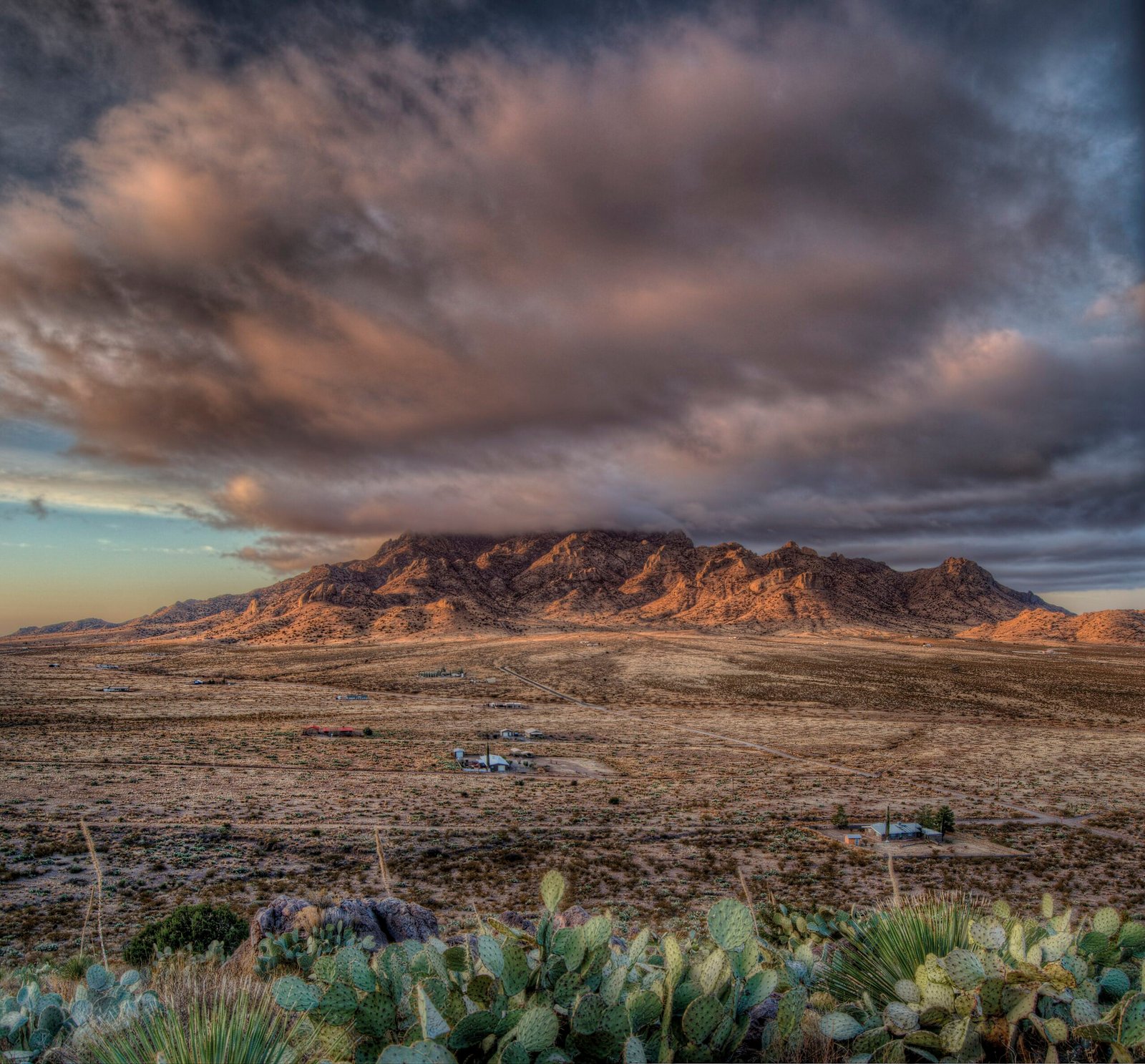
Photo: John Fowler from Placitas, NM, USA / Wikimedia Commons, CC BY 2.0
One of the most memorable features of Rockhound is the scenery.
The campground’s elevated desert setting provides expansive views across southern New Mexico.
During sunset, the mountains and surrounding landscape can glow with beautiful colors.
The combination of rocky hills, cactus, and distant mountain ranges creates excellent opportunities for landscape photography.
And after sunset, the night sky becomes another attraction.
The area is removed from the brightest lights of major metropolitan centers, creating opportunities for stargazing.
On clear nights, visitors may enjoy views of stars and constellations that are difficult to see from urban areas.
Bring a comfortable camp chair, warm clothing, and a red-light flashlight.
Even without a telescope, simply sitting beneath the desert sky can become one of the highlights of your camping trip.
The best time to go camping
Rockhound State Park is open year-round, but the experience changes significantly with the seasons.
Spring is one of the most attractive times to visit.
Daytime temperatures are often comfortable for hiking, and favorable rainfall conditions may produce beautiful desert wildflower displays.
However, spring winds can be strong.
Summer brings intense sunshine and hot daytime temperatures.
The park’s exposed trails and limited natural shade make midday hiking less appealing.
Summer thunderstorms can also develop, bringing lightning, heavy rain, and occasional flash-flood concerns.
Fall is another excellent season.
Temperatures become more comfortable, and the desert landscape is particularly enjoyable for hiking and photography.
Winter offers relatively mild daytime conditions compared with northern states, but nighttime temperatures can fall below freezing.
Tent campers need appropriate sleeping equipment and clothing.
Our recommendation: March through April and October through November are particularly appealing for tent camping at Rockhound. These periods often provide more comfortable hiking conditions than midsummer.
Always check the forecast before departure, especially for wind, overnight temperatures, and thunderstorms.
What we like about Rockhound State Park
Rockhound has several qualities that make it stand out from conventional campgrounds.
Unique rock-collecting opportunities: Few state parks allow visitors to search for and collect geological specimens for personal use.
Beautiful mountain setting: The Little Florida Mountains provide a dramatic backdrop.
Small campground atmosphere: Fewer than 30 developed campsites create a more intimate environment.
Modern conveniences: Showers, drinking water, and restrooms make tent camping more comfortable.
Interesting hiking trails: The Jasper and Thunder Egg trails provide opportunities to explore the geology and scenery.
Year-round operation: Visitors can enjoy the park during different seasons.
Excellent photography: Wide-open desert landscapes and colorful sunsets create memorable views.
Wildlife and birdwatching: The surrounding desert supports a variety of species.
Educational opportunities: The visitor center and geological features make the park particularly appealing for curious campers.
Peaceful surroundings: The park’s location outside Deming provides a welcome escape from busy urban environments.
For campers who enjoy geology, photography, hiking, and distinctive natural settings, Rockhound offers an unusual and rewarding experience.
Potential drawbacks to consider
Rockhound’s desert environment isn’t ideal for every camper.
Limited natural shade: Many campsites and hiking areas are exposed to direct sunlight.
Strong winds: Tent campers need secure stakes and properly anchored equipment.
Summer heat: High temperatures can make midday outdoor activities uncomfortable.
Rocky terrain: Some tent sites and trails may have firm or uneven surfaces.
Cold winter nights: The high-desert climate can produce freezing temperatures.
Limited recreational variety: There are no lakeside beaches or extensive water-based activities.
Small campground: Campsite availability may be limited during popular travel periods.
Fire restrictions: Current restrictions prohibit traditional wood and charcoal campfires.
Remote atmosphere: Supplies and restaurants require a drive into Deming.
Wildlife precautions: Snakes, insects, and thorny desert vegetation are part of the environment.
None of these drawbacks should discourage properly prepared campers.
However, visitors who prefer heavily shaded woodland campsites, abundant water recreation, or resort-style entertainment may find another destination more suitable.
Reservations, fees, and practical planning
Rockhound State Park is managed by the New Mexico State Parks Division.
The campground is open year-round.
Reservations are available through the state’s ReserveAmerica system and can be made up to six months in advance.
Camping fees
New Mexico’s published 2026 fee schedule distinguishes between resident and nonresident campers, as well as campsites with utility hookups.
| Fee category | Published rate |
|---|---|
| Nonresident developed campsite | $20 per night |
| New Mexico resident developed campsite | $15 per night |
| Nonresident primitive campsite | $15 per night |
| Electric hookup, where available | Additional $10 per night |
| Water hookup, where available | Additional $5 per night |
| Sewer hookup, where available | Additional $5 per night |
New Mexico State Parks’ 2026 statewide fee schedule. Actual site totals depend on campsite type, residency, utilities, and booking charges.
For tent campers, the most important consideration is choosing a site that suits your needs.
You may not need electrical service, so compare the available campsite categories before reserving.
The reservation platform currently displays a general camping base rate of $20, with additional charges possible for hookups.
Confirm the full price before completing your booking.
Reservation and camping policies
New Mexico State Parks publishes several important rules.
Reservations: May be made up to six months in advance.
Check-in: 4 p.m., according to the state’s published camping policy.
Checkout: 2 p.m.
Quiet hours: 10 p.m. to 7 a.m.
Summer maximum stay: Seven days within a 20-day period from May 1 through September 30.
Off-season maximum stay: Fourteen days within a 20-day period from October 1 through April 30.
Pets: Must be controlled and leashed according to state park regulations.
Off-highway vehicles: Not permitted inside New Mexico State Parks.
Fire restrictions: Stage II restrictions currently apply at Rockhound.
Late arrival: Contact the park if you won’t arrive as scheduled. The reservation system warns that no-show reservations may be released without a refund.
Reservation and cancellation fees also apply.
Check the current reservation terms before booking, since some published state pages list different administrative fee schedules.
Directions and contact information
Rockhound State Park is located approximately 14 miles southeast of Deming.
From Deming, travel south on New Mexico Highway 11 for approximately five miles.
Turn east onto Rockhound Road, also known as State Road 141, and continue approximately nine miles to the park.
The final approach leads toward the Little Florida Mountains.
Use the official campground directions rather than relying solely on a navigation app.
Official planning information
- Address: 9880 Stirrup Road SE, Deming, NM 88030
- Park telephone: 575-546-6182
- Reservations: 877-664-7787
- Official park page: Rockhound State Park — New Mexico State Parks
- Campground reservations: Reserve Rockhound State Park
- Official park map: Download Rockhound trail map
- Fees and permits: New Mexico State Parks fees
- Fire restrictions: Current state park fire restrictions
Final verdict: Is Rockhound State Park worth visiting?
Absolutely—especially for tent campers who appreciate unusual landscapes, geology, hiking, and peaceful desert surroundings.
Rockhound State Park offers something genuinely different from a typical campground.
Instead of spending your days exploring forests or lakeshores, you can wander rocky trails, search for fascinating minerals, photograph colorful mountain landscapes, and enjoy the enormous skies of southern New Mexico.
The campground’s small size adds to its appeal.
And the availability of showers, drinking water, and developed facilities makes the experience more comfortable than primitive desert camping.
The biggest consideration is preparation.
Rockhound’s exposed landscape means tent campers must plan for strong sunshine, wind, temperature changes, and limited shade.
Current fire restrictions also mean traditional campfires aren’t available.
But for visitors who embrace the high-desert environment, those limitations are part of what makes the experience distinctive.
Camping Frontier’s recommendation: Rockhound State Park is an excellent choice for tent campers who want to explore the geology and natural beauty of southern New Mexico. Reserve a suitable campsite, bring plenty of drinking water and sun protection, confirm the current rock-collecting rules, and allow at least two nights to enjoy the hiking trails, desert scenery, and remarkable sunsets.
Liked this? Get one like it every week.
Practical camping guides, gear picks and campground reviews, in your inbox once a week, plus the free First Camping Trip Checklist when you join. See what's inside.
Free. One email a week. Unsubscribe anytime.