Riley Creek Campground Review: An Unforgettable Tent Camping Adventure in Denali National Park, Alaska
Featured image: Photo: Denali National Park and Preserve / Wikimedia Commons, Public domain
Imagine waking up inside your tent on a cool Alaska morning.
The air smells of spruce trees and damp earth. A light breeze moves through the forest, and somewhere beyond your campsite, a raven calls from the treetops.
You unzip your tent, step outside, and take a moment to appreciate your surroundings.
You’re not simply camping in another wooded campground.
You’re spending the night in one of America’s most extraordinary national parks.
Beyond the forest lies a vast wilderness of mountains, tundra, braided rivers, and valleys where moose, caribou, Dall sheep, and grizzly bears roam.
And on a clear day, the towering summit of Denali—North America’s highest mountain—may appear above the Alaska Range.
Welcome to Riley Creek Campground, the largest and most accessible developed campground in Denali National Park and Preserve.
Located just a quarter-mile inside the park entrance, Riley Creek offers an appealing combination of authentic Alaska camping and convenient visitor facilities.
You’ll find wooded campsites, dedicated walk-in tent sites, picnic tables, fire grates, drinking water during the summer, restrooms, and nearby access to hot showers, laundry facilities, and camping supplies.
The campground also connects to trails leading toward the Denali Visitor Center.
But what makes Riley Creek especially attractive is its location.
You can spend the day exploring Denali’s enormous wilderness, take a park bus into the interior, enjoy a ranger program, or walk through the surrounding boreal forest.
Then return to your tent for an evening beneath the Alaska sky.
There are a few important considerations, however.
Riley Creek is a genuine Alaska campground. Summer nights can be chilly, rain is common, mosquitoes can be persistent, and wildlife safety requires careful attention.
And although the campground is open year-round, most services operate only during the summer.
For campers who arrive prepared, though, Riley Creek offers a remarkable opportunity to experience Denali without giving up every modern convenience.
Riley Creek Campground at a glance
| Feature | Details |
|---|---|
| Location | Denali National Park and Preserve, Alaska |
| Address | Mile 0.25, Denali Park Road, Denali Park, AK 99755 |
| Campground type | National Park Service developed campground |
| Setting | Wooded boreal forest near the park entrance |
| Total sites | 142 |
| Dedicated tent-only sites | 20 walk-in sites |
| Other camping | Mixed tent/RV sites and a group tent site |
| Campsite hookups | None |
| Picnic tables | Yes |
| Fire grates | Yes, at standard campsites |
| Drinking water | Seasonal |
| Restrooms | Seasonal flush toilets; year-round vault toilets |
| Hot showers | Seasonal, at Riley Creek Mercantile |
| Laundry | Seasonal |
| Food-storage lockers | Yes |
| Camp store | Seasonal |
| Wi-Fi | Seasonal connectivity in the entrance area |
| Cell reception | Available, but carrier performance varies |
| Pets | Permitted under park restrictions |
| Operating season | Year-round; reduced services outside summer |
| Reservations | Recommended for reservable summer sites |
| Tent-only walk-in sites | First-come, first-served in person |
| Best suited for | Tent campers, wildlife enthusiasts, hikers, Alaska road trippers |
Verified against the National Park Service’s official Riley Creek Campground information.
What makes Riley Creek Campground special?
The biggest attraction is its position at the gateway to Denali.
Denali National Park and Preserve encompasses approximately six million acres of Alaskan wilderness.
It’s a landscape of tremendous contrasts.
Dense spruce forests gradually give way to open tundra. Broad valleys stretch toward rugged mountain ranges. Rivers wind through gravel beds, and enormous glaciers descend from the high peaks.
At the center of this landscape stands Denali, rising to 20,310 feet.
For many visitors, exploring this park is a once-in-a-lifetime experience.
And Riley Creek provides a convenient place to begin.
Unlike more remote campgrounds deeper along Denali Park Road, Riley Creek sits near the park entrance and its principal visitor services.
That makes it especially attractive for first-time visitors.
You can reach the campground in a conventional passenger vehicle, set up your tent, and explore much of the entrance area without undertaking a lengthy backcountry expedition.
The Denali Visitor Center, bus depot, trails, and seasonal commercial services are nearby.
The campground itself has a distinctive Alaska atmosphere.
Its campsites are surrounded by spruce and other boreal forest vegetation, creating a setting that feels wonderfully removed from ordinary urban life.
And while it’s a developed campground, the surrounding wilderness is very real.
Moose and bears occasionally move through the campground.
Red squirrels and snowshoe hares are more commonly encountered.
For wildlife enthusiasts, that adds excitement—but it also means campers must follow strict food-storage practices.
Riley Creek offers a fascinating combination: a convenient campground within a truly wild national park.
Tent campsites and the camping experience
Photo: Denali National Park and Preserve / Wikimedia Commons, Public domain
Riley Creek offers several camping arrangements, but for Camping Frontier, the dedicated tent-only sites deserve particular attention.
The campground has 20 walk-in tent-only sites in a section of its third loop.
These are designed specifically for visitors camping in tents rather than recreational vehicles.
And they offer an experience that feels a little different from the campground’s larger vehicle-accessible sites.
Walk-in tent-only sites
The dedicated tent-only sites don’t have parking directly beside the tent pads.
Instead, campers leave their vehicles in a designated parking area and carry their equipment to the campsite.
That means you’ll need to think carefully about how much gear you bring.
A compact tent, sleeping bags, sleeping pads, cooking equipment, and essential supplies are manageable.
However, hauling large coolers, heavy furniture, and multiple storage containers may be less convenient.
The advantage is a camping area without vehicles parked directly beside every tent.
That can create a more traditional camping atmosphere.
Important reservation detail: Riley Creek’s walk-in tent-only sites are first-come, first-served and cannot be reserved before you arrive.
You must physically arrive at the park to obtain one of these sites.
During the busy summer season, availability isn’t guaranteed.
If securing a campsite before traveling to Alaska is essential, consider reserving one of Riley Creek’s mixed-use sites that also permits tents.
Vehicle-accessible campsites
Most Riley Creek sites accommodate either tents or vehicles.
These campsites are organized into different size categories.
For tent campers, they can be an excellent alternative to the walk-in section.
You can park beside your campsite, unload equipment easily, and store food in a hard-sided vehicle.
That’s particularly convenient when camping in bear country.
The campground’s wooded layout provides some natural screening between sites.
However, privacy varies.
Some campsites are relatively open, while others have more trees and vegetation separating them from neighbors.
The surfaces are generally compacted gravel, with reasonably level camping areas.
Each standard campsite includes a picnic table and fire grate.
Choosing the best campsite
Riley Creek operates differently from campgrounds where you reserve a specific numbered site.
For reservable sites, you book a campsite category.
Then, when you arrive, you choose an available site within that category.
That makes arrival time important.
Campers who arrive earlier generally have more choices.
For tent camping, consider:
How much privacy you want.
Distance to the nearest restroom.
Whether you’ll be carrying gear from a parking area.
The condition and levelness of the tent pad.
Exposure to rain and wind.
Proximity to food-storage lockers.
Whether your vehicle can remain beside the campsite.
Our tent camping tip: If you’re visiting during the summer and want a particular type of site, arrive as early as practical after the previous campers’ checkout time. Don’t assume that a reservation guarantees a specific numbered campsite.
Campground amenities and facilities
Riley Creek offers more conveniences than many visitors expect from a national park campground in Alaska.
However, there’s an important distinction between amenities available throughout the year and those offered only during the summer.
Restrooms and drinking water
During the summer operating season, Riley Creek has flush toilets and potable-water spigots.
Vault toilets remain available year-round.
The park generally aims to turn on campground water systems around May 15, although cold weather can delay the process.
In autumn, winter, and early spring, only one campground loop remains open, and water access is limited.
For summer tent campers, the availability of drinking water and flush toilets makes the experience considerably more comfortable.
For off-season campers, the experience is much more primitive.
Riley Creek Mercantile
The nearby Riley Creek Mercantile serves as the campground’s primary convenience center.
During the summer, it offers camping supplies, food, ice, firewood, and other essentials.
The mercantile is especially useful for visitors who need to replenish supplies after traveling through Alaska.
It also provides access to hot showers and laundry facilities.
For the 2026 season, the concessioner listed the mercantile as operating from May 20 through September 20.
Published daily hours were 7 a.m. to 11 p.m.
These dates and hours may change in future seasons, so confirm them before planning your trip.
Hot showers and laundry
Hot showers are available at the mercantile during the summer season.
That’s a welcome convenience after a day of hiking through muddy trails or exploring the park in cool, rainy weather.
Laundry facilities are also available.
For travelers spending several weeks in Alaska, this can be particularly useful.
However, the showers and laundry are not year-round amenities.
Visitors camping outside the main summer season should plan accordingly.
Food-storage lockers
Food-storage lockers are one of Riley Creek’s most important facilities.
Because bears and other wildlife may enter the campground, food and scented items must be stored properly.
That includes more than groceries.
Toothpaste, sunscreen, cooking utensils, coolers, and other scented items should also be secured.
If you have a hard-sided vehicle, store these items inside it.
If you’re camping without a vehicle, use the designated food-storage lockers.
Label and date items placed in shared lockers.
Never leave food or scented equipment unattended around your tent.
Amphitheater and ranger programs
The campground has an amphitheater where seasonal programs may take place.
Ranger-led presentations offer opportunities to learn about Denali’s wildlife, geology, ecology, and cultural history.
These programs are particularly enjoyable for families.
They can also help first-time visitors understand the park’s unique environment before venturing farther into the wilderness.
Check the current program schedule at the visitor center or campground.
Things to do near Riley Creek Campground
Riley Creek’s location makes it an excellent base for exploring Denali’s entrance area.
Explore the Denali Visitor Center
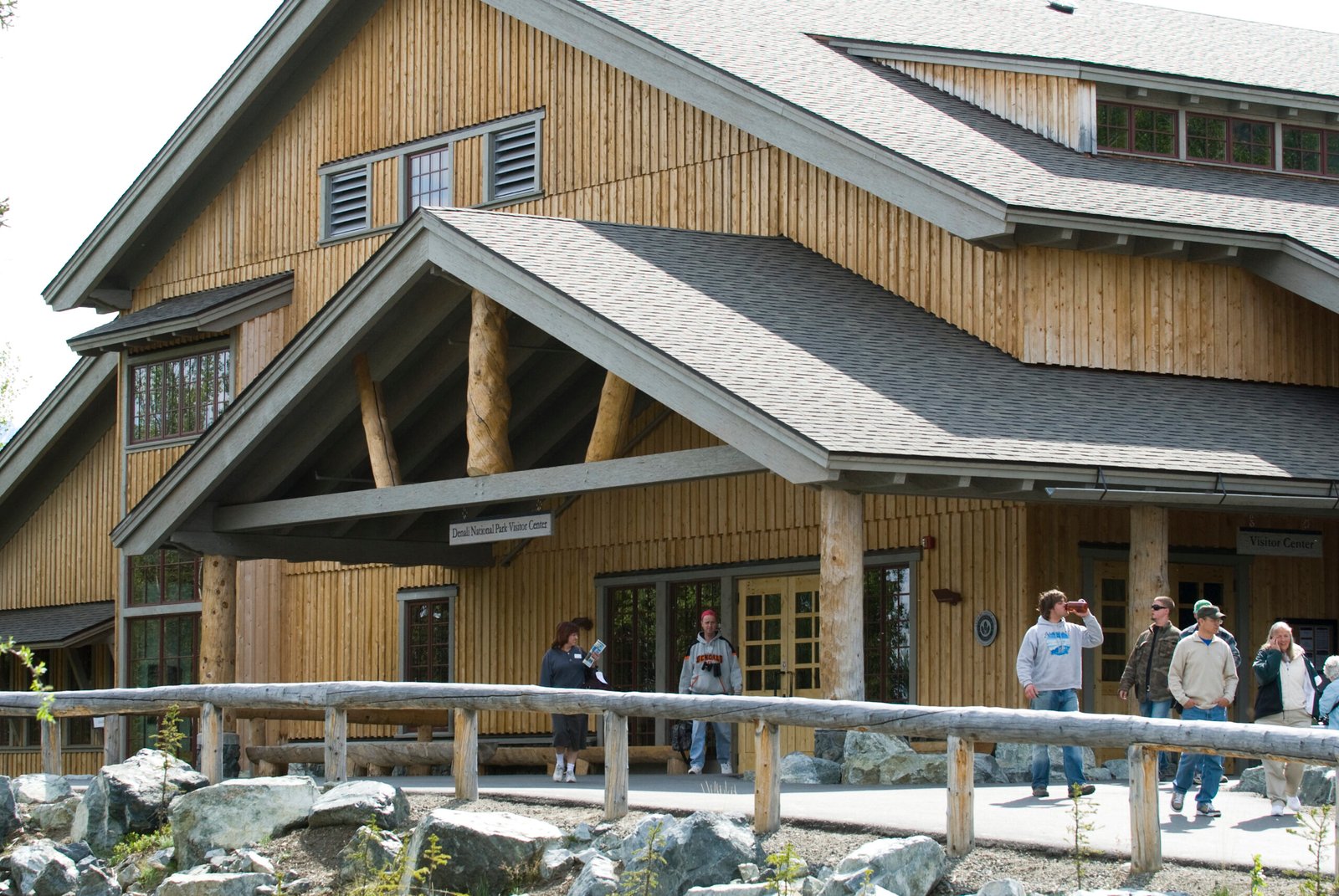
Photo: Denali National Park and Preserve / Wikimedia Commons, Public domain
The Denali Visitor Center is one of the best places to begin your visit.
Located approximately 1.5 miles along Denali Park Road, the center provides information about the park’s wildlife, geology, hiking opportunities, and transportation system.
Visitors can explore exhibits, speak with park staff, and learn about current trail conditions.
The surrounding area also connects to several hiking trails.
One advantage of Riley Creek is that trails lead from the campground toward the visitor center.
That means you can enjoy a walk through the forest without necessarily needing to drive.
For first-time visitors, spending an hour or two at the visitor center is an excellent introduction to Denali.
Hike the Horseshoe Lake Trail
The Horseshoe Lake Trail is one of the most appealing hikes near the park entrance.
The trail descends through forest toward a beautiful lake and surrounding wetlands.
Along the way, hikers may encounter beaver activity, birds, and other wildlife.
The scenery is particularly attractive during the summer, when the forest is green and the lake reflects the surrounding hills.
However, the trail includes an uphill climb on the return journey.
Wear sturdy hiking shoes and allow plenty of time.
Because wildlife can be present, remain alert and maintain appropriate distances.
Explore the Mount Healy Overlook Trail
For hikers seeking a more challenging adventure, the Mount Healy Overlook Trail offers a rewarding climb.
The trail ascends from the entrance area through forest and toward higher elevations.
As you climb, the vegetation changes and the views gradually open.
On clear days, hikers can enjoy impressive views of the surrounding mountains and valleys.
However, this is a strenuous hike with significant elevation gain.
Weather conditions can change quickly at higher elevations.
Bring appropriate layers, water, snacks, and rain protection.
For experienced hikers, it’s one of the most rewarding day hikes accessible from the park entrance.
Take a bus into Denali’s interior

Photo: NPS Photo / Kira Heeschen / Wikimedia Commons, Public domain
One of the most memorable experiences in Denali is traveling along the park road by bus.
Unlike many national parks, Denali restricts most private vehicle travel beyond the entrance portion of Denali Park Road.
The bus system allows visitors to experience landscapes that would otherwise be difficult to reach.
Along the route, you may encounter caribou, moose, Dall sheep, grizzly bears, and other wildlife.
Sightings are never guaranteed.
But even without animals, the scenery can be extraordinary.
Wide valleys, braided rivers, tundra-covered hills, and distant mountains create a dramatic wilderness landscape.
Important: The Pretty Rocks landslide and related road construction have limited access to the park’s western interior. Do not assume that a bus trip reaches Wonder Lake or the traditional western terminus. Check the current road status and available tour routes before purchasing tickets.
Visit the sled dog kennels
Denali is famous for its working sled dogs.
The park maintains a sled dog kennel that supports winter patrols and transportation.
Visitors can learn about the dogs and their important role in park operations.
During the summer, kennel demonstrations may be offered.
These programs provide a fascinating introduction to Alaska’s mushing traditions.
For families, they’re often a highlight of the visit.
Check current demonstration schedules and transportation options before going.
Enjoy wildlife watching
Denali is one of America’s premier wildlife destinations.
The park supports populations of moose, caribou, grizzly bears, wolves, Dall sheep, and numerous smaller animals.
Some species are easier to encounter than others.
Moose may appear in forested areas near the entrance.
Caribou and Dall sheep are often associated with more open landscapes.
Bears may be seen in different parts of the park, depending on seasonal conditions and food availability.
Always maintain safe distances.
Never approach wildlife for photographs.
And never leave food or scented items accessible at your campsite.
The best time to go tent camping
Riley Creek is open year-round, but the experience varies dramatically by season.
Late spring brings longer daylight hours and gradually improving temperatures. However, snow, frozen ground, and delayed water-system openings are possible.
Summer is the main camping season. Visitor services operate, trails become more accessible, and the park’s transportation system provides opportunities to explore farther into Denali.
Early autumn offers beautiful colors as tundra vegetation and deciduous trees begin changing. Temperatures drop quickly, and snow is possible.
Winter is a completely different experience. Only one campground loop remains open, most visitor facilities close, and temperatures can become dangerously cold.
For traditional tent campers, June through August is generally the most practical period.
July offers long daylight hours and access to most summer services.
However, rain and mosquitoes are common.
Late August and early September can be beautiful, with autumn colors beginning to appear.
But nighttime temperatures can be chilly, and early snow is possible.
Our recommendation: Late June through early August offers the most convenient combination of campground services, hiking opportunities, and transportation options. Pack for rain and cold weather regardless of when you visit.
What we like about Riley Creek Campground
Several features make Riley Creek particularly attractive.
Extraordinary location: Camping inside Denali National Park is a memorable experience.
Dedicated tent-only sites: Walk-in sites provide an appealing alternative to mixed tent/RV camping.
Wooded atmosphere: Spruce forest creates a traditional Alaska camping environment.
Convenient visitor facilities: The mercantile, showers, laundry, and visitor center are nearby.
Access to hiking trails: Campers can explore the entrance area without extensive driving.
Wildlife opportunities: Denali is home to some of Alaska’s most remarkable animals.
Year-round operation: The campground remains available outside the main summer season, although services are limited.
Food-storage lockers: An important convenience for tent campers without vehicles.
Educational programs: Ranger activities help visitors learn about the park.
Excellent transportation access: Nearby bus services make exploring the park easier.
For tent campers seeking a genuine Alaska experience with useful facilities nearby, Riley Creek is an outstanding option.
Potential drawbacks to consider
Even a remarkable campground has limitations.
Unpredictable weather: Rain, wind, chilly temperatures, and even summer snow are possible.
Mosquitoes: Insects can be persistent during parts of the summer.
Wildlife precautions: Proper food storage is essential.
Limited tent-only reservations: Dedicated walk-in tent sites cannot be reserved in advance.
Seasonal facilities: Showers, laundry, the mercantile, and many water systems operate only during summer.
No campsite hookups: Electrical, water, and sewer connections aren’t available at individual sites.
Occasional highway noise: The campground’s proximity to Alaska Highway 3 means some traffic sounds may be noticeable.
Limited privacy: Some campsites are more exposed than others.
High summer demand: Reservable sites may fill well in advance.
Remote location: Travel distances in Alaska can be substantial, and supplies may cost more than in the contiguous United States.
These considerations are part of planning a successful Alaska camping trip.
For prepared campers, they need not detract from the experience.
Reservations, fees, and practical planning
Riley Creek Campground is managed through Denali’s authorized campground concessioner.
Reservations for the 2027 summer season open December 1, 2026.
The campground operates year-round, but fees are charged during the summer season.
Published 2026 camping rates
| Campsite type | Summer nightly rate |
|---|---|
| Walk-in tent-only site | $25.75 |
| Type B mixed tent/RV site | $43.25 |
| Type A mixed tent/RV site | $55.00 |
| Tent group site | $49.00 |
| Winter camping | Free |
These are the concessioner’s published 2026 rates. Walk-in tent-only sites are first-come, first-served. Some eligible Senior and Access Pass holders receive discounted rates. The National Park Service’s general campground page displays slightly older summer figures, so use the concessioner’s current booking total for actual trip planning. Mixed tent/RV sites fit RVs up to 40 feet, and Denali charges a separate $15 per-adult entrance fee.
For tent campers, the walk-in sites offer the lowest published summer price.
However, their first-come, first-served availability creates uncertainty.
If you’re traveling a long distance and need a guaranteed place to camp, reserving a mixed-use campsite may be the better option.
Important campground rules
Check-in and checkout: 11 a.m. during the summer season.
Maximum stay: 14 nights during the summer season.
Maximum occupancy: Eight people per standard campsite.
Quiet hours: 10 p.m. to 6 a.m.
Generators: Permitted only from 8–10 a.m. and 4–8 p.m.
Pets: Allowed in the campground on leashes no longer than six feet. Pets must not be left unattended.
Food storage: All food and scented items must be secured in a hard-sided vehicle or designated food locker.
Campfires: Allowed only in established fire grates, subject to any current restrictions.
Firewood: Use locally purchased wood or collect dead and downed wood where permitted. Do not cut standing trees.
Wildlife: Never approach or feed animals.
Reservations: Mixed-use sites may be reserved in advance. Walk-in tent-only sites are assigned in person.
Arrival: All summer campers must check in and obtain their campground permit before occupying a site.
Directions and contact information
Riley Creek Campground is located just inside the entrance to Denali National Park.
From Anchorage or Fairbanks, travel along Alaska Highway 3, also known as the Parks Highway.
At approximately Mile 237, turn west onto Denali Park Road.
Continue about a quarter-mile.
The campground entrance will be on your left.
Official planning information
- Address: Mile 0.25, Denali Park Road, Denali Park, AK 99755
- Reservations and campground questions: 800-622-7275
- Official NPS campground page: Riley Creek Campground
- Reservations: Reserve Denali
- Campground rates: Official camping rates and operating dates
- Denali visitor information: Plan your Denali visit
- Park campground rules: Denali campgrounds and regulations
Final verdict: Is Riley Creek Campground worth visiting?
Absolutely—especially for tent campers who dream of experiencing Alaska’s extraordinary wilderness.
Riley Creek Campground offers an appealing balance between authentic outdoor adventure and practical visitor conveniences.
Its wooded campsites provide a comfortable base for exploring Denali.
The dedicated walk-in tent sites offer a traditional camping experience, while the vehicle-accessible sites provide an alternative for visitors who prefer to keep their gear close.
The nearby mercantile, hot showers, laundry facilities, and visitor center make the campground particularly convenient during summer.
And with hiking trails, wildlife viewing, ranger programs, and park transportation nearby, there’s plenty to enjoy.
However, visitors must arrive prepared for Alaska’s unpredictable weather and strict wildlife-safety requirements.
Rain, mosquitoes, chilly nights, and limited seasonal services are all important considerations.
But for campers who appreciate wild landscapes and unforgettable natural experiences, Riley Creek is a remarkable destination.
Camping Frontier’s recommendation: Riley Creek Campground is an outstanding choice for tent campers visiting Denali National Park. Reserve a mixed-use campsite if guaranteed summer accommodations are important, or arrive early to try for a dedicated walk-in tent site. Bring reliable rain gear, warm sleeping equipment, insect protection, and appropriate food-storage supplies. Plan at least three nights to explore the entrance trails, visitor center, and available park bus routes.
Liked this? Get one like it every week.
Practical camping guides, gear picks and campground reviews, in your inbox once a week, plus the free First Camping Trip Checklist when you join. See what's inside.
Free. One email a week. Unsubscribe anytime.