Set Up Camp in the Right Order: The First 30 Minutes
The first half hour at a new campsite sets the tone for the whole stay. Rush the site choice or leave the tent for last and you’re staking poles by headlamp. A fixed order—walk the pad, park the car, shelter, then kitchen—gets you weatherproof and cooking before the light fades.
Prefer to watch? Here’s the full video walkthrough.
Step by step: the first 30 minutes
- Walk the site before you unload (minutes 0–5). Confirm the pad is the one on your reservation, note slope, drainage, dead branches overhead and how far the water / bathhouse are. Pick the flattest, best-drained tent spot that still leaves room for the car and a kitchen zone. If the site is wrong or unsafe, fix it with the host before everything hits the ground.
- Park with purpose (minutes 5–8). Back in if you’ll leave in the dark. Point the trunk or hatch toward camp so gear walks a short line. Set the parking brake. Keep one lane clear for emergency vehicles if the campground asks for it.
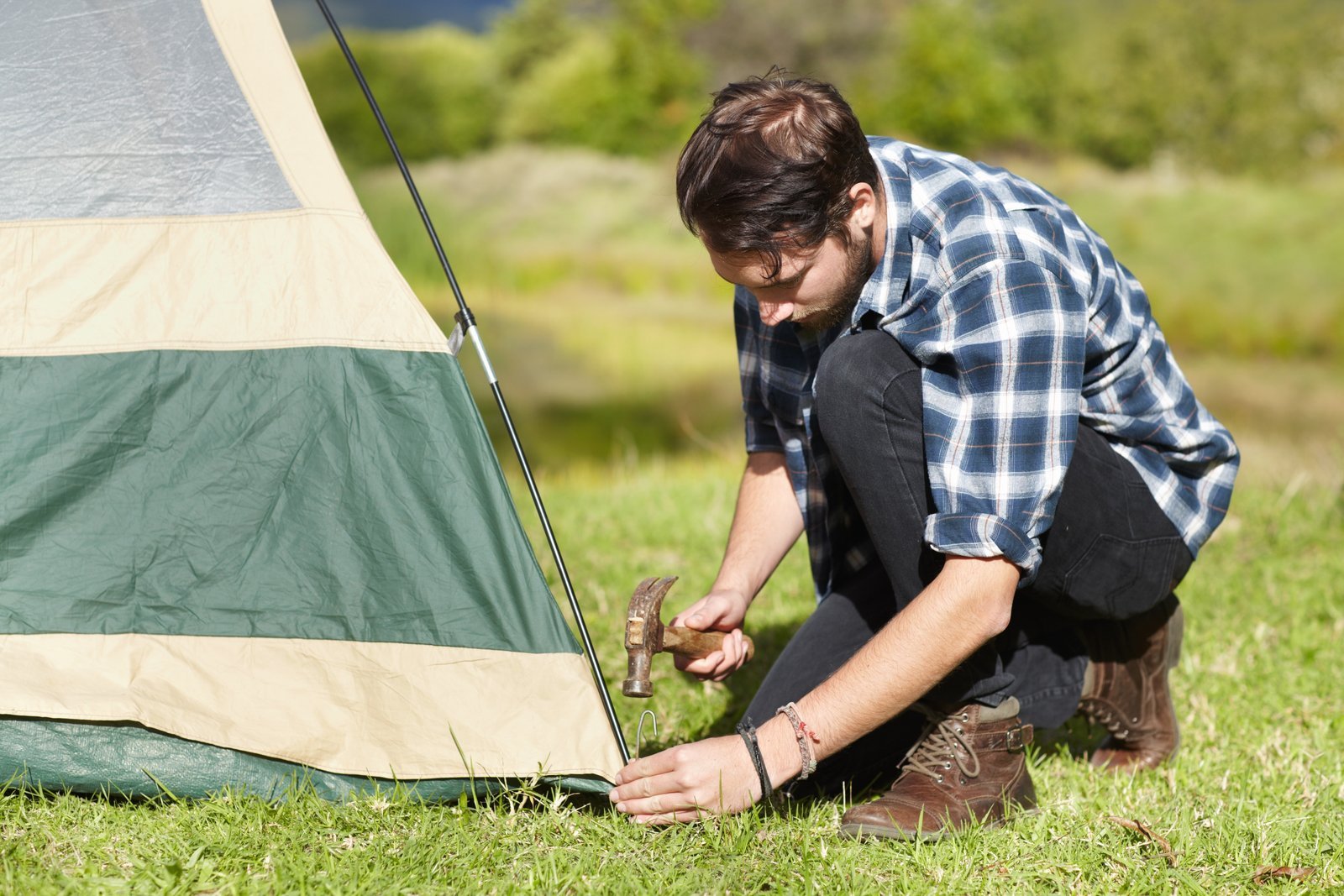
- Shelter before kitchen (minutes 8–20). Tent (or canopy) goes up first while you still have daylight and calm hands. Stake and guy as you go so a gust doesn’t take the canopy. Rainfly on before you open sleeping bags. Footprint or ground cloth under the floor, tucked so it doesn’t catch rainwater.
- Sleep system inside (minutes 20–24). Pads inflated or unrolled, bags or quilts fluffed, headlamps and a layer change staged where you can find them without digging. A dry tent with beds ready beats a perfect kitchen and wet sleeping bags.
- Kitchen and food last among the big three (minutes 24–28). Stove on a stable, level surface outside the tent vestibule. Cooler in the shade. Food sealed and stored to the campground’s rules (vehicle, locker or hung where required). Never cook inside the tent.
- Light, water, quick scan (minutes 28–30). Hang or place a lantern, put a headlamp on every adult, fill a water jug, and do a 30-second hazard scan: guy lines, open flames, food smell, trash. Then you can breathe—and build a fire only if time, rules and conditions allow. Our campfire basics episode covers a safe fire once the site is set.
Why this order works
Weather and darkness punish a backwards setup. Shelter first means your dry clothes and sleep system have a home if rain starts mid-unload. Kitchen after shelter keeps food packed while you’re focused on poles. Lights and a hazard scan at the end catch trip lines before someone walks into them.
Arriving late? Shrink the list: walk the pad, tent with rainfly, pads and bags, food secured, headlamps on. Fancy camp furniture can wait until morning. For the bigger first-trip plan, see Your First Camping Trip and the mistakes beginners make in 15 Camping Mistakes Beginners Make.
Free printable: grab the First Camping Trip Checklist, one page that covers the checks beginners most often skip.
FAQ
Should I set up the tent or the kitchen first?
Tent (or tarp/canopy) first. Once you’re weatherproof and beds are ready, build the kitchen. Food stays safer packed while you focus on poles and stakes.
What if I arrive after dark?
Use headlamps on low or red, walk the pad carefully, pitch the tent with the rainfly, get pads and bags inside, secure food, and finish the rest at first light. Don’t rush a fire in unfamiliar terrain.
Where should the car point?
Park so the hatch or trunk faces camp when you can, leave room for others to pass, and follow posted campground rules. Backing in makes a dark departure easier.
Related: Your First Camping Trip · Frontier Camp Skills: Campfire Basics · 15 Camping Mistakes Beginners Make